Tāttvika Project
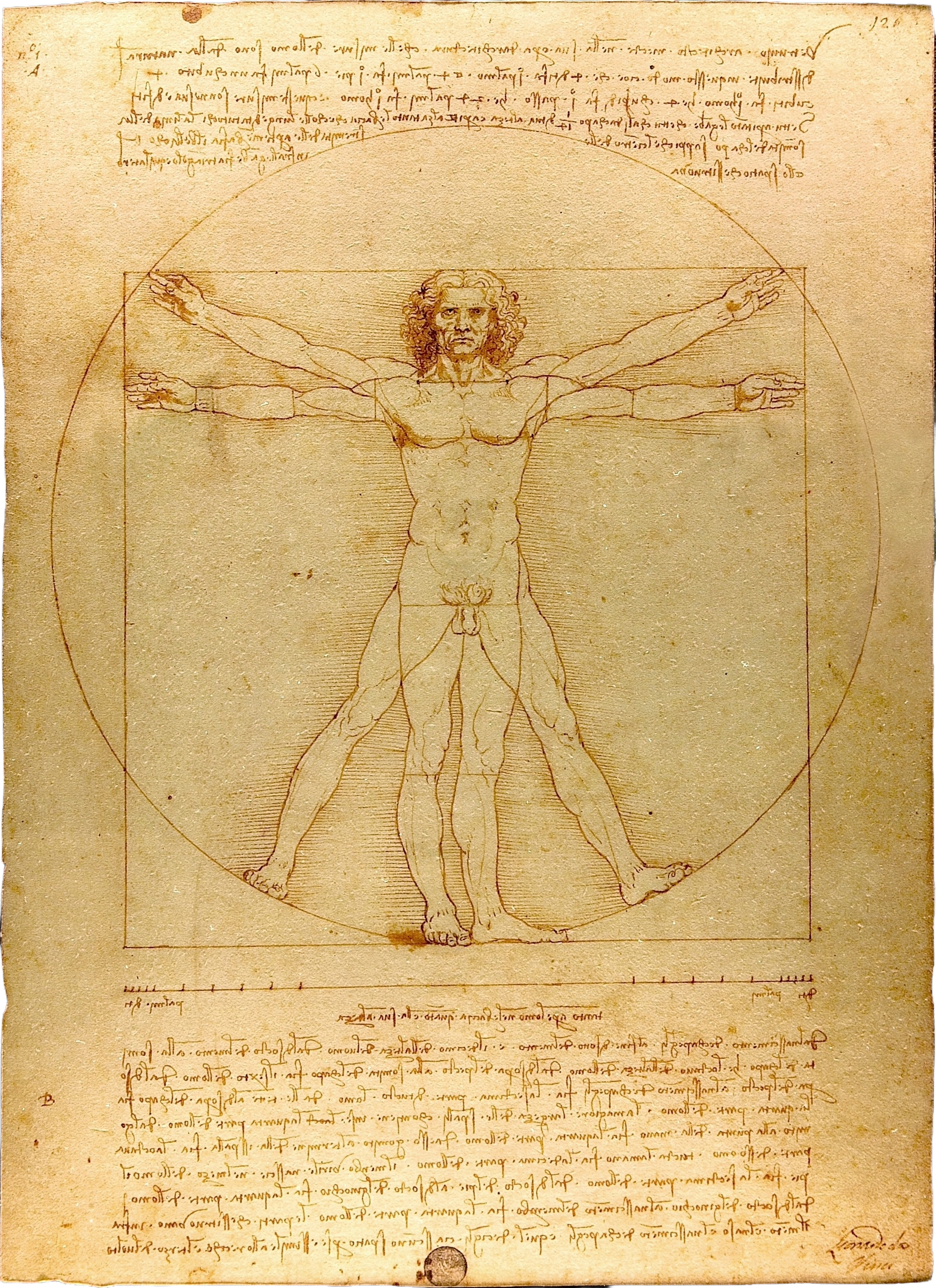
Tāttvika is an experiment in independent theoretical research and open-access teaching. It begins with a simple conviction: an individual, suitably empowered, can pursue truth rigorously and share it openly. The pursuit of truth and the structure of institutional academia are not always the same. In an ideal world, they would converge, but in practice, they can diverge, especially in foundational disciplines due to their natural abstractness and lack of tangibility.12345
The project explores how far rigorous intellectual work can be carried by an empowered individual, independently of institutional structures, while remaining open-access and socially meaningful. Where institutions provide collaborative teams, Tāttvika experiments with AI Augmentation (AIA) — treating agents as extensions of the researcher’s own mind, each amplifying a specific capability. The wager is that this can compensate for the absence of institutional support, at pocket-level cost.
Rooted in theoretical physics and foundational reflection on science and academia in general, Tāttvika is an attempt to turn independence into a viable condition for thought. Its premise is wider than academia: AIA aims to empower any discerning individual to act competently beyond their formal expertise, and Tāttvika is where that general empowerment meets research and teaching.
Picture courtesy: Wikimedia Commons
Tāttvika Web (www.tattvika.org)
A Next.js-based platform for research dissemination, technical blogging, and open-access teaching.
Multi-Environment Publishing Pipeline
Tāttvika features a unique single-source-of-truth architecture where content originates as JSON and syncs bidirectionally across multiple typesetting environments:
         JSON (source of truth)
              │
    ┌─────────┼─────────┐
    ↓         ↓         ↓
   Web      LaTeX     Quarto
  (HTML)    (.tex)    (.qmd)
How it works:
- Content is initiated via web form (JSON)
- Automatically syncs to LaTeX and Quarto environments for editing
- Authors can edit in any environment (LaTeX for arXiv submission, Quarto for rich visual editing)
- Single-key sync back to JSON truth, which then propagates to all other formats
- Supports heavy math rendering across all environments
Status: LaTeX-JSON-Quarto mapping completed and tested on math-heavy content. Platform in active development.
The Uni Collective 🦄
The Uni Collective is a team of purpose-built AI agents—each with a specialized role (research, literature analysis, writing, system development)—that work under human direction to support independent research. The name Uni is intentional: a Union of agents, each Unique in role, with the quiet ambition of a Unicorn.
Research Pipeline
Research → Document Preparation → Refinement & Formatting → Web / arXiv Publication
The Uni Collective supports an end-to-end workflow where AI agents assist in exploration, drafting, and refinement—while the human researcher remains actively present at every intellectual step. The Tāttvika Web platform is designed to integrate seamlessly with this pipeline, enabling efficient publication to both web and arXiv from a single workflow.
- Multi-surface operation (Discord, CLI, IDE-integrated agents)
- Unified contextual memory across all interactions
- Teaching pipeline: in planning
Roadmap
Completed:
- LaTeX-JSON-Quarto bidirectional sync architecture.
- Math-heavy content rendering pipeline.
- First-stage context engineering for the Uni Collective: agent-level memory integration via an Obsidian-based work-area vault; cross-agent global context integration in progress.
Near-term:
- Public launch of Tāttvika Web platform
- Research workflow optimization with Uni Collective integration
- Inaugural research post: a symmetry-preserving UV cutoff in quantum field theory
Exploratory:
- Teaching platform development
- Selective automation of research reporting and progress tracking
Open Source
All Tāttvika applications—including the web platform, browser extensions, and supporting tools—are open source.
Follow the Evolution
This repository serves as a public log of the project’s technical and conceptual development.
-
“Robert K. Merton, The Normative Structure of Science (1942).” Accessed March 15, 2026. https://www.panarchy.org/merton/science.html. ↩
-
Ioannidis, John P. A. “Why Most Published Research Findings Are False.” PLOS Medicine 2, no. 8 (2005): e124. https://doi.org/10.1371/journal.pmed.0020124. ↩
-
Smaldino, Paul E., and Richard McElreath. “The Natural Selection of Bad Science.” Royal Society Open Science 3, no. 9 (2016): 160384. https://doi.org/10.1098/rsos.160384. ↩
-
Ellis, George, and Joe Silk. “Scientific Method: Defend the Integrity of Physics.” Nature 516, no. 7531 (2014): 321–23. https://doi.org/10.1038/516321a. ↩
-
Hossenfelder, Sabine. Lost in Math: How Beauty Leads Physics Astray. Basic Books, 2018. ↩